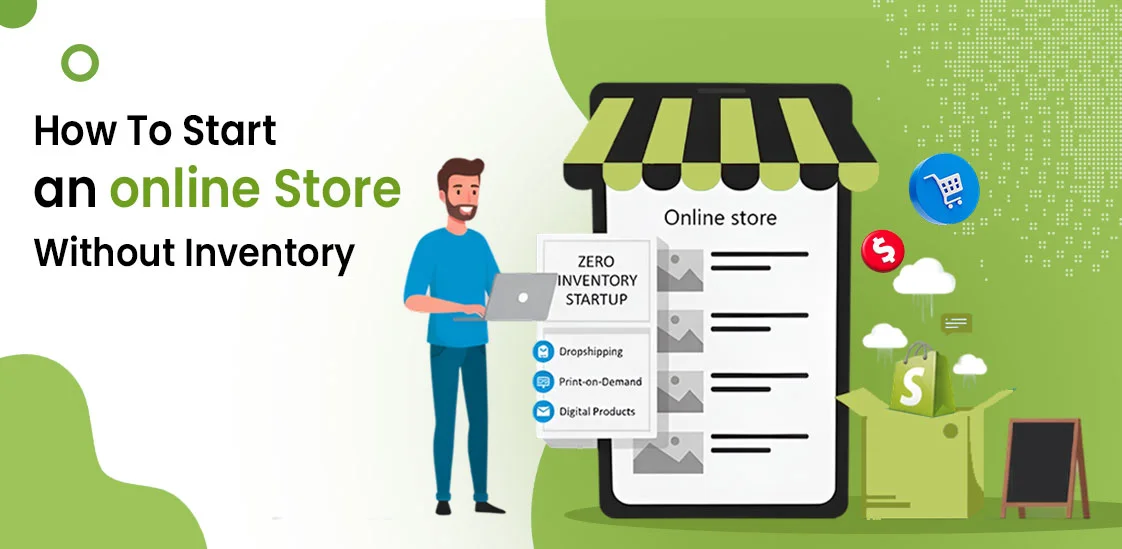
Starting an online store doesn’t always mean stocking up products or renting warehouse space. With the right strategy, you can launch an Online Store Without Inventory and still build a profitable brand. Thanks to ecommerce tools, fulfillment partners, and automated systems, running a store has never been easier or more accessible.
This guide breaks down the benefits, challenges, and proven ways to start. You’ll also find what to consider before you launch and answers to the most common questions about this business model.
6 Ways to Start an Online Store Without Inventory
Ready to launch your online store without inventory? Here are six proven methods to consider:
1. Dropshipping
Dropshipping is one of the most popular ways to start an online store without inventory. You list supplier products in your online store, and when a customer makes a purchase, the supplier handles packaging and delivery. You never physically touch the product.
How it works:
- You establish an e-commerce store (e.g., on Shopify).
- You partner with a dropshipping supplier (e.g., via Oberlo, DSers) and add their products to your store.
- A customer purchases an item from your store at retail price.
- You purchase the item from the supplier at wholesale price, providing the customer’s shipping details.
- The supplier ships the product directly to your customer under your brand.
- You keep the difference as profit.
Pros: Access to a vast product catalog, extremely low startup costs, easy to test new products and niches, and highly scalable.
Cons: Lower profit margins, heavy reliance on supplier reliability, intense competition, potential for long shipping times if sourcing globally.
2. Print-on-Demand (POD)
Print-on-demand allows you to sell custom-designed products like T-shirts, mugs, phone cases, and posters without holding any inventory. You create unique designs, and when a customer places an order, a POD service prints your design onto the product and ships it directly to them.
How it works:
- You create unique designs.
- You integrate a POD service (e.g., Printful, Printify, Gelato) with your online store.
- You apply your designs to their blank product catalog and list them for sale.
- A customer orders a product from your store.
- The POD service prints your design onto the item, fulfills the order, and ships it.
Pros: Creative control over unique products, no inventory management, strong branding potential, and enables niche market targeting.
Cons: Limited control over product quality and base material, profit margins can vary based on product and POD provider, and reliance on the POD service for fulfillment.
3. Selling Digital Products
Digital products are items that exist purely in digital format, such as e-books, software, templates, stock photos, online courses, music, or graphic design assets. Once created, they can be sold repeatedly without any need for physical production or inventory. This is an excellent way to start an online store without inventory.
How it works:
- You create a digital product (e.g., write an e-book, design a template).
- You list it for sale on your online store or a dedicated platform (e.g., Gumroad, Etsy for certain types, or directly on Shopify with specific apps).
- When a customer purchases, they instantly download the product.
Pros: Exceptionally high-profit margins (after initial creation costs), passive income potential, no shipping or storage concerns, and global reach.
Cons: Requires significant upfront time and skill for creation, effective marketing is crucial to stand out, and potential for piracy.
4. Fulfillment by Amazon (FBA)
Fulfillment by Amazon (FBA) allows you to sell products on Amazon while letting the platform handle storage, packaging, and shipping. You send your products to Amazon’s fulfillment centers, and when customers place orders, Amazon manages delivery, customer service, and returns on your behalf.
How it works:
- You source or manufacture products to sell.
- You ship your inventory to Amazon’s warehouses.
- Amazon stores, packs, and delivers the products when orders are placed.
- You pay fees for storage and fulfillment, while you focus on marketing and growth.
Pros: Access to Amazon’s massive customer base, Prime shipping eligibility, streamlined fulfillment, and trusted customer support.
Cons: Requires upfront inventory investment, storage fees can add up, limited control over branding and packaging, and competitive product listings.
5. Affiliate Marketing
Affiliate marketing involves promoting other companies’ products or services and earning a commission for every sale or lead generated through your unique affiliate link. While not strictly an “online store” in the traditional sense, you can build a content-rich website (like a review site or blog) that acts as a storefront for various products.
How it works:
- You sign up for affiliate programs (e.g., Amazon Associates, ShareASale, CJ Affiliate).
- You create content (blog posts, reviews, videos) that promotes specific products or services.
- You embed your unique affiliate links within your content.
- When a visitor clicks your link and makes a purchase, you earn a commission.
Pros: No product creation, no customer service, no shipping, a vast range of niches, and low operational effort once content is created.
Cons: Earnings are commission-based and can be lower, reliance on third-party products and sales processes, and requires strong content creation and audience building.
6. Third-Party Logistics (3PL)
Third-party logistics (3PL) providers manage the storage, packaging, and shipping process for your online store. Instead of handling fulfillment yourself, you partner with a logistics company that takes care of warehousing and deliveries, letting you focus on sales, marketing, and customer relationships.
How it works:
- You partner with a 3PL provider and send them your products.
- When a customer places an order on your store, order details are sent automatically to the 3PL company.
- The 3PL team picks, packs, and ships the order to your customer.
- They can also handle returns and restocking.
Pros: Saves time, scalable for growing businesses, faster shipping through multiple warehouses, and reduced operational stress.
Cons: Requires upfront inventory, recurring storage and fulfillment fees, less control over packaging or delivery experience, and reliance on external partners for order accuracy.
Advantages of an Online Store Without Inventory
Choosing an online store without inventory comes with several advantages that make it a preferred choice for many new and established entrepreneurs:
Lower startup costs: You don’t need to purchase or store products, which eliminates warehouse and inventory management expenses. This significantly reduces the financial burden during the initial stages.
Scalability and flexibility: Without physical stock limitations, you can easily expand your product range, experiment with new offerings, or adapt quickly to market trends, making your business more agile.
Ideal for solopreneurs: Ecommerce automation tools handle order processing, inventory syncing, and shipping notifications, making it manageable for one-person businesses to scale efficiently without overwhelming logistics.
Global reach: Digital products or dropshipping models enable you to reach customers worldwide with instant or direct shipping options, breaking down geographical barriers and opening up diverse markets.
Reduced risk: Not investing in inventory means you’re less exposed to the risk of unsold stock, allowing you to focus investment on marketing and customer acquisition.
Key Challenges of Starting an Online Store Without Inventory
While there are many benefits, there are also challenges to consider when you decide to start an online store without inventory:
Less control over product quality: Relying on third-party suppliers means you depend on their quality control, which can sometimes lead to inconsistent products affecting customer satisfaction and brand reputation.
Tough competition: Since starting an online store without inventory is accessible and popular, especially with dropshipping, the market can get crowded; therefore, identifying a unique niche and branding is key.
Complex returns and customer service: Without direct access to inventory, managing returns, refunds, or exchanges can be complicated, as it involves coordination between the supplier and your customers.
Lower profit margins: Because products are not bought in bulk, you might pay a higher per-unit price compared to traditional wholesale methods, which can reduce your overall profit.
Shipping delays: Depending on your supplier’s logistics and location, shipping can sometimes be slower or inconsistent, potentially impacting customer satisfaction.
Key Considerations Before Starting an Online Store Without Inventory
Before you jump into an online store without inventory, consider the following critical factors to ensure long-term success:
Startup budget and costs: Some models, like dropshipping and affiliate marketing, require very little upfront investment, while others, like FBA and 3PL, need more capital for inventory and storage fees.
Creative control: Print-on-demand and digital products allow you to express creativity through design and branding, while dropshipping and affiliate sales rely more on marketing strategy.
Business goals: Think about whether you want passive income, quick scalability, or to build a brand with strong customer loyalty, as different models support different goals.
Time commitment: Some business models demand day-to-day operational involvement, especially in customer service, supplier coordination, and product updates, so gauge how much time you can dedicate.
Supplier and quality management: Finding reliable suppliers and ordering samples is crucial to maintaining product quality and customer satisfaction.
FAQ: How To Start an Online Store Without Inventory
Is it profitable to sell without inventory?
Yes, many entrepreneurs earn consistent income through this model. While margins are smaller, the low overhead costs balance profitability.
Which platform is best for beginners?
Shopify is ideal for starting an online store without inventory, thanks to its user-friendly setup, integrated supplier apps, and robust analytics.
How can I ensure quality control?
Always order product samples before listing and maintain communication with your suppliers. Regular feedback loops can also help ensure quality.
How do I handle refunds and returns?
Suppliers usually process returns, but you should clearly outline your policy on your website to avoid confusion.
Can I sell globally?
Yes, but confirm your suppliers can ship worldwide and that your store supports multiple payment gateways like PayPal and Shopify Payments.
Do I need technical knowledge to start?
Not necessarily. Shopify’s drag-and-drop builder simplifies setup, and professional Shopify Store Developers can help with custom design or automation.
Conclusion
Starting an online store without inventory is an excellent way to enter the ecommerce marketplace with minimal risk and scalable potential. It offers flexibility, lower costs, and the ability to test and grow your business efficiently. Whether you are an aspiring solopreneur or an established company looking to expand digital sales channels, this model can fit diverse business needs.
At Webzia Infotech, we specialize in creating custom ecommerce solutions designed to help you succeed in inventory-free commerce. As a leading Shopify Development Agency, our skilled developers bring expertise to efficiently launch and optimize your online store without inventory. Connect with us today to discover how we can help bring your ecommerce vision to life and drive your business growth forward.